Oversize and overloaded trailers on Australian roads
Width and mass are different tickets. Most custom trailers in Australia fail on ATM, GTM or GCM long before they need an oversize permit — but 2.5 metres, 4.3 metres and a 19-metre combination are hard edges.
By Riley Hart · 17 September 2024 · Updated 4 March 2026 · 6 min read · 1,279 words
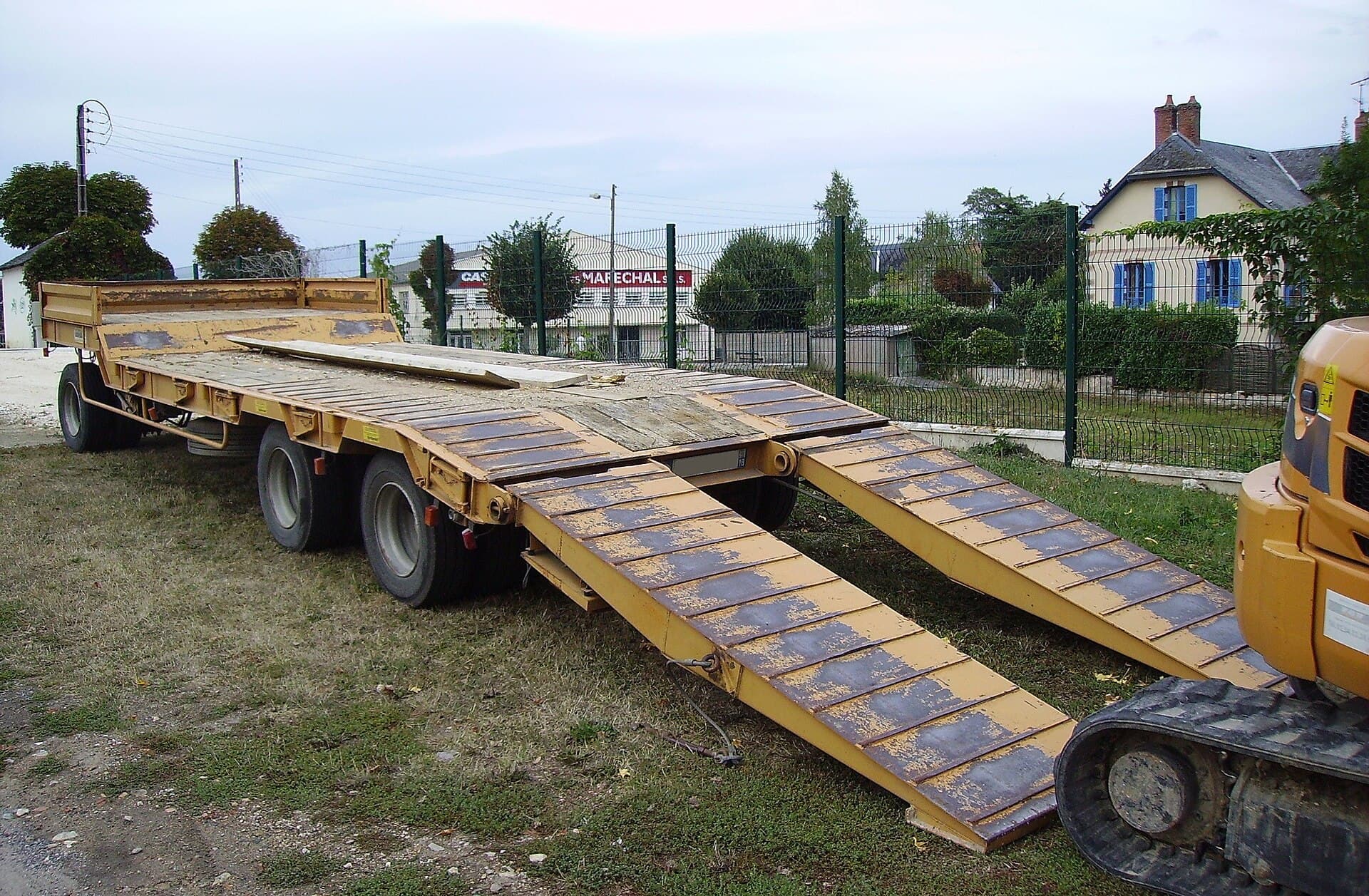
A 1.8-tonne excavator on a tag trailer looks like a dimension problem from the driveway. The machine’s blade is 80 millimetres outside the mudguards, the buckets are on the deck, and someone has found a faded oversize flag in the toolbox. On the weighbridge at Port Wakefield the story is different. The trailer’s ATM is 2,700 kg. The combination is already over the dual-cab’s GCM with a three-quarter tank and a cooler on the back seat. The extra 80 millimetres would have been a permit conversation. The mass is a roadside conversation.
Oversize and overload are taught as one “heavy haul” idea. On custom light trailers they are two different failures. Most Australian owners hit the mass limits first. The ones who hit width first are usually moving boats, plant or a deck they specified 2,500 mm “plus lights”. This is a workshop reading of those edges. It is not legal advice. Confirm the current dimension, mass and permit rules before you travel.
The standard box, before anyone talks about permits
For light vehicles — GVM or ATM at or below 4.5 tonnes — the numbers that keep repeating across state pages are:
- 2.5 metres overall width
- 4.3 metres overall height
- 19 metres for a vehicle-plus-trailer combination
- 12.5 metres for a rigid motor vehicle on its own
- 12.2 metres maximum length for a pig trailer, including the drawbar and rear protrusions
- 8.5 metres maximum drawbar on a pig trailer
- rear overhang the lesser of 3.7 metres or the length of the front load space
South Australia’s oversize light vehicle page states the first four plainly. VSB 1 states the trailer-specific lengths. Victoria’s Class O scheme and Queensland’s projecting-load rules use the same 2.5 / 4.3 / 19 metre box and then add notices for the people who step outside it.
Width includes mudguards, side-mounted spares, racks and awnings. It excludes lamps required for compliance. That last sentence is how builders talk themselves into a 2,520 mm deck: “the lights don’t count, so the body can be 2.5.” The lights don’t count. The toolbox, the winch handle and the tie-down rail do.
Height includes the load. A legal trailer with an illegal excavator boom is an oversize combination. Length includes the coupling and a spare on the tail. If you are building plant gear, read plant and machinery trailers before you freeze the deck.
Overload is a stack of ratings, not one number
Mass is where custom trailers quietly become illegal on ordinary Tuesdays.
ATM is the maximum laden mass of the trailer, including download. Exceed it and the trailer is overloaded even if the tow vehicle feels fine.
GTM is the mass on the trailer’s tyres. Exceed it and you have overloaded the axle group, the tyres or both, even if ATM still has a little left on the ball.
Tare is what you should have weighed empty. Payload is ATM minus tare. A 2,000 kg ATM trailer with a 1,100 kg tare is a 900 kg payload machine. Wet soil, wet cattle, a wet boat and a wet camper water tank do not care what the brochure promised. Reading the plate is the literacy this section assumes.
Tow vehicle GVM is the vehicle’s own laden limit. People load the tray of a dual-cab with toolboxes, a canopy, passengers and 80 kg of ball download and then wonder why the rear leafs are flat before the trailer is full.
GCM is the combination. It is often the first number you run out of. A vehicle with a 3,500 kg braked tow rating and a 6,000 kg GCM cannot tow 3,500 kg if the vehicle itself is already 3,100 kg on the weighbridge.
Towbar, coupling and tyres each have a rating. The combination is only as legal as the lowest of them. That is the whole point of matching a trailer to your tow vehicle.
There is no Australian exemption that says a trailer may be overloaded if you drive slowly, or if you are a primary producer, or if the job is only to the next town. Load restraint is a separate duty. A legal mass with an excavator walking on the deck is still a dangerous combination.
When a load is projecting rather than oversize
Queensland’s projecting loads page is a useful national reminder: for light vehicles the total width including the load is still 2.5 metres, and side projection is typically capped at 150 mm. Long loads that stay inside width still need end markings, and at night they need lights. A set of pipes that are legal at noon can be a defect after dusk.
Flags are not a permit. An orange flag on a boat bunk that is 2.7 metres wide is a confession, not an approval. Some states allow specific over-width boats or special-use light trailers under a gazette notice — Queensland has a guideline for certain boats up to 2.9 metres and for long aircraft or dragon-boat trailers — but those notices have routes, times, Christmas shut-downs and lighting conditions. Read the notice. Do not assume a Gold Coast boat rule applies on the Stuart.
Permits: light is state, heavy is NHVR
Stay at or below 4.5 tonnes and an oversize conversation is with the state or territory. Victoria calls it Class O and publishes a notice that covers some combinations up to stated limits, then wants a permit beyond that or in restricted areas. South Australia talks about exemptions by notice or permit. NSW and Queensland have their own light-oversize products. The ACT, Tasmania, WA and the NT each have a counter for this.
Cross 4.5 tonnes ATM, or put the trailer behind a heavy vehicle, and you are usually in NHVR Oversize Overmass country. Check national and state notices and the network maps before you apply for a permit. Western Australia and the Northern Territory still run their own heavy access. A permit is a route and a set of conditions, not a blessing to use the M1 at 5 p.m. with a 3.4-metre deck.
Pilots, travel-time windows, warning lights and “do not overtake turning vehicle” plates belong to those conditions. They are not decorations you add because the trailer looks big.
Design out the need for a permit
The cheapest oversize permit is the one you never need.
- Specify the deck so the finished width, including rub rails and tie-down points, is inside 2,500 mm.
- Put spare wheels in the A-frame or on the headboard, not on the side, if width is tight.
- Measure height with the load you actually carry, including folded excavator booms and boat screens.
- Keep pig-trailer length honest. A long drawbar is a stability choice and a legal length.
- If the machine will not fit, hire a heavy combination that already lives in the OSOM world rather than widening a 3.5-tonne tag.
If the job is genuinely oversize, budget the permit, the time-of-day limits and the risk that one state notice will not cover an interstate run. Then register the trailer as the vehicle it is, not as the vehicle you wish it was. Registration by state will not wash away a 2.6-metre deck.
This is not legal advice. Confirm dimension limits, projecting-load rules and permit schemes with your state or territory agency, or with the NHVR for heavy combinations, before you build or travel.
The next decision is whether the tow vehicle can legally and physically stand in front of whatever you have just kept inside the box. Width is a tape measure. Mass is a set of plates. Start with matching a trailer to your tow vehicle.
Questions readers ask
- What are the standard dimension limits for a light trailer combination in Australia?
- As a working rule, 2.5 metres wide, 4.3 metres high, and 19 metres for the vehicle-plus-trailer combination. A pig trailer itself is limited to 12.2 metres including the drawbar. States publish the same numbers with local permit schemes once you exceed them.
- Is an overloaded trailer the same as an oversize trailer?
- No. Oversize is a dimension problem. Overload is a mass problem — ATM, GTM, axle group, towbar, coupling or GCM. You can be legal on width and illegal on mass, which is the more common custom-trailer failure.
- Who issues oversize permits?
- For light vehicles (GVM or ATM at or below 4.5 tonnes) the state or territory does, by notice or permit. For heavy combinations the National Heavy Vehicle Regulator handles most jurisdictions; Western Australia and the Northern Territory keep their own processes.
- How far can a load project past the sides?
- Many light-vehicle rules cap side projection at 150 mm each side, and the total width including the load still has to stay inside 2.5 metres unless you have an exemption. Confirm the local projecting-load rule before you hang excavator buckets outboard.
- Is this legal advice?
- No. Confirm dimension, mass and permit rules with your state agency or the NHVR before you travel.