Trailer lights, reflectors and number plates
ADR 13 is a lighting system, not a shopping list of LED lamps. Placement, approval marks, a working plate lamp and a plug that survives corrugations decide whether a custom trailer is visible — and registerable.
By Sam Keating · 21 May 2024 · Updated 9 September 2025 · 6 min read · 1,363 words
A highway patrol car on the Newell does not need a weighbridge to take an interest in your trailer. One dead tail lamp at dusk, a number plate sitting in the shadow of a jerry-can holder, or a pair of indicators that flash on the vehicle and stay dark on the drawbar is enough. Lighting is the most public part of trailer law. It is also the part custom builders treat as a last-Friday electrical job.
ADR 13 is about the installation of lighting and light-signalling devices. Vehicle Standards Bulletin 1 turns that rule into a table a workshop can actually use. Neither document cares that your LED clusters were on special. They care that the right devices, with the right approvals, sit in the right windows and light up with the tow vehicle. This is not legal advice. Confirm the current ADR, VSB 1 and your state agency’s inspection practice before you drill the tail panel.
Lighting is a system
A trailer lighting system has four parts that fail independently.
Approved devices. Lamps and retro-reflectors need evidence they meet the national road vehicle standards. The clean path is a component type approval you can search on the department’s register, or a UN approval the supplier will put on paper. Buying “DOT” lamps from a marketplace listing is how a tidy aluminium trailer fails a blue slip. The department’s own VSB 1 commentary is blunt: you can buy lamps anywhere, but you must be certain they are compliant.
Geometry. Height, width, spacing and visibility angles are specified. Pairs sit equally either side of the centreline. Nothing on the trailer — spare wheel, toolbox, bike rack, opened ramps — may obstruct the output. A lamp that works on the bench and disappears behind a mudguard stay is not fitted.
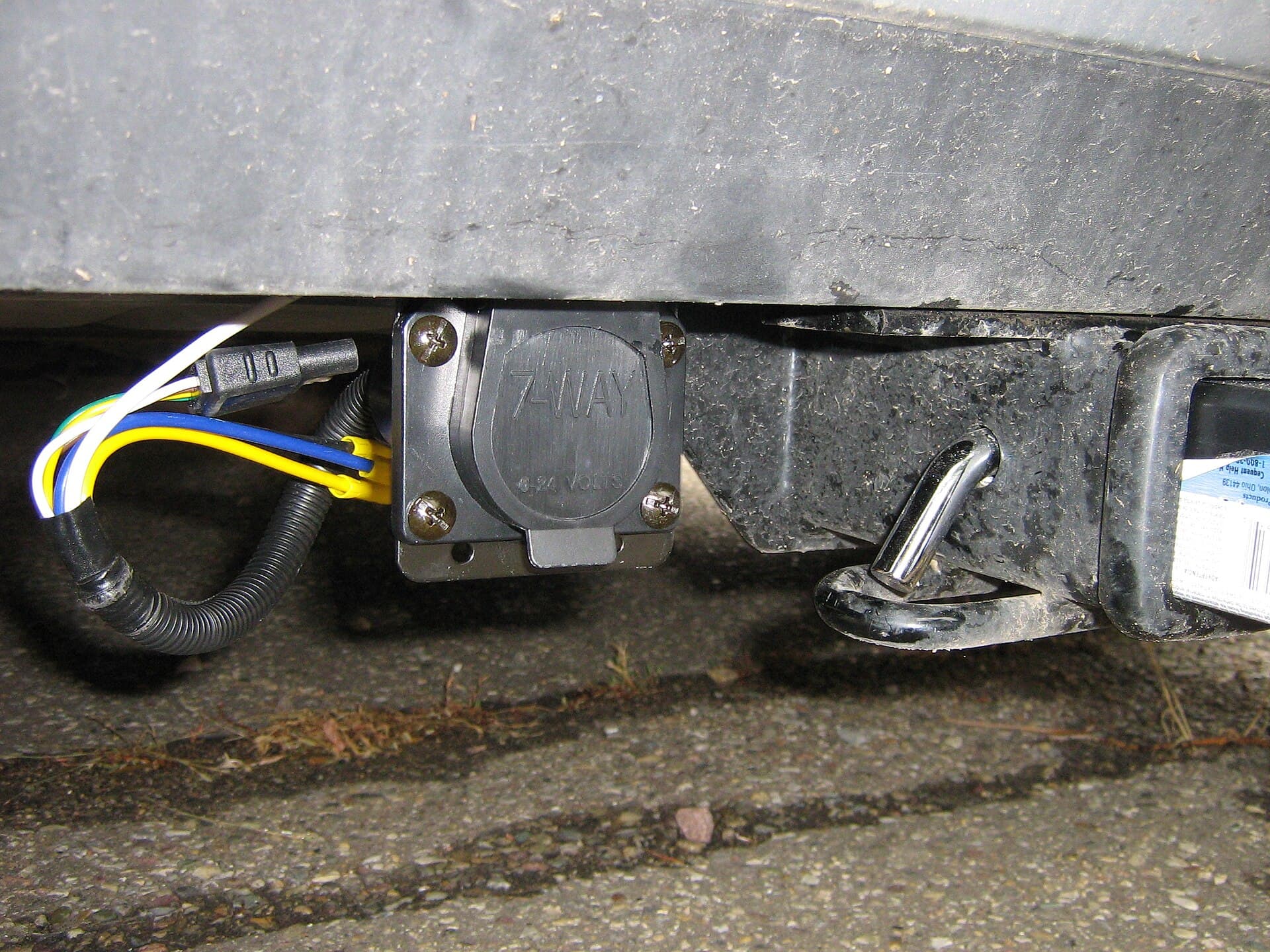
Electrical behaviour. Trailer lamps must operate with the corresponding lamps on the towing vehicle. That means a plug pinout that matches the vehicle, earths that are not hoping the coupling will do the job, and a harness that still exists after a summer of corrugations. The outback version of that work is in wiring a trailer for the outback.
The number plate as a lamp load. The rear registration plate is a lighting problem as well as a stamping problem. It needs a dedicated lamp. No part of the plate may sit more than 1,300 mm above the ground. A plate bolted to the top rail of a plant trailer because the ramps ate the tail panel is already non-compliant, before anyone argues about characters or state-issued metal.
If you want the design-rule context around all of this, read ADR trailer compliance in Australia. Lighting is the ADR most owners can check with a helper and a 12-volt source.
What VSB 1 expects on a light trailer
VSB 1’s essential-lighting table is the one to pin above the crimper.
Every trailer, irrespective of size, needs:
- rear position lamps (tail lamps)
- rear stop lamps (brake lamps)
- rear direction-indicator lamps
- rear retro-reflectors
- a rear registration-plate lamp
- front retro-reflectors
- side retro-reflectors
Front position lamps are added when the trailer is longer than 4,000 mm and wider than 1,600 mm, or when it is simply wider than 1,800 mm. Plenty of tandem cage and car trailers trip that width trigger without anyone noticing until the inspector asks where the white front lamps are.
Front and rear clearance lamps, and side-marker lamps, arrive when the trailer is wider than 2,100 mm. Side-marker lamps also arrive when the trailer is longer than 6,000 mm. Alternative red/amber side-marker arrangements exist in ADR 13; do not invent your own.
Optional extras — a centre high-mount stop lamp, reverse lamps — are allowed. Once fitted, they must meet the ADRs as well. There is no casual lane for extras.
Colour is not a style choice. Rear position and stop lamps are red. Indicators are amber. Front position lamps are white. Reflectors follow the same logic: red to the rear, amber to the side, white or amber to the front as specified. A smoked lens that looks tough in a catalogue and reads brown at 50 metres is a defect.
Number plates are a dimension, a lamp and a piece of state property
VSB 1 treats the rear registration plate as a design feature of the trailer, not as something the owner will “sort after registration”. Provide a flat mount, the right way up, within the height cap, not hinged on a piece of ally that folds when the ramps drop. The plate lamp must light the characters, not the winch post.
State agencies issue the plate and care about their own rules for size, position and whether a second plate is required on a long drawbar. NSW, Victoria and Queensland all see enough homemade mounts to have opinions. Fit the mount so an inspector can read the plate from behind without crouching in the gravel. If you are heading into registration, state by state, a missing plate lamp is an avoidable second trip.
Do not put the plate on the toolbox lid. Lids open. Do not put it on the spare wheel. Wheels get borrowed. Do not hide it with a bike rack you intend to fit “only on weekends”. ADR 13 does not have a weekend clause.
Plugs, earths and the myth of the hitch as a return
Australian light towing is still a country of 7-pin flat plugs, 7-pin round plugs and a growing number of 12-pin connectors on campers. The pin that matters for brakes is the auxiliary. The pin that matters for lamps is all of the others, plus a real earth.
Using the coupling as the earth is a habit from an older, rustier Australia. It works until the 50 mm ball is painted, greasy or sitting on a weight-distribution head. Then the right-hand indicator becomes a dim orange suggestion. Run a dedicated earth to a clean chassis point, protect the harness at every d-shackle and leaf-spring corner, and keep a length of the cable off the drawbar so it cannot drag.
Corrugations kill lighting by fatigue, not by philosophy. Adhesive-backed LED strips on a chequer-plate lid last until the first dirt road. Through-bolted lamps with rubber gaskets, loomed cable and strain relief at the plug last years. If you are building for the Tanami or a Cape York run, specify the harness the way you specify the chassis. Trailer flooring and bodywork should leave lamp faces in free air, not in a mud pocket.
Inspection failures you can prevent on Thursday
These are the lighting defects that send custom trailers home.
- Lamps with no approval mark, or marks that do not match the device.
- One tail lamp earth shared with a metal mudguard that is itself bonded through a painted bolt.
- Indicators that are too close together on a narrow box, or too far under a wide tail, so they fail the visibility angle.
- A number plate above 1,300 mm, or a plate lamp that points at the ground.
- Side reflectors fitted only on the left because the right side has a hose reel.
- Front position lamps omitted on a trailer that is 1,850 mm wide “because it is still a box trailer”.
- A seven-pin plug wired to a six-core cable, with brakes or reverse left for later.
- Work lamps wired into the tail circuit, so the trailer looks like a fishing boat on the highway.
A helper, a charged battery and the VSB 1 table will catch most of that before you book the inspection. The regulations hub is the place to keep the rest of the compliance reading.
This is not legal advice. Confirm ADR 13, the current VSB 1 lighting chapter and your state or territory agency’s inspection rules before you buy lamps, move a plate mount or present a trailer.
Once the lamps are a designed system rather than a parts-bin finish, the next obstacle is usually the state queue: VIN, RAV, weighbridge and the local inspection product. Take the lighting file with you and start at registering a custom-built trailer, state by state.
Questions readers ask
- What lights does every Australian trailer need?
- Regardless of size, a trailer needs rear position lamps, stop lamps, direction indicators, rear retro-reflectors, a rear registration-plate lamp, front reflectors and side reflectors. Wider or longer trailers then add front position lamps, clearance lamps and side-marker lamps.
- How high can the number plate sit?
- VSB 1 says no part of the rear registration plate may be higher than 1,300 mm above the ground. The plate also needs its own lamp so the characters are readable at night.
- Are cheap online LED lamps legal?
- Only if they are actually approved for use in Australia — typically a component type approval you can search, or a UN approval the lamp maker can produce — and only if they are fitted in the right place, the right way up, without obstruction. A bright lamp with no approval is still a fail.
- Do trailer lamps have to work with the vehicle’s lamps?
- Yes. Trailer lamps must operate with the corresponding lamps on the towing vehicle. Pairs must sit equally either side of the centreline.
- Is this legal advice?
- No. Confirm ADR 13, VSB 1 and your state inspection rules before you buy lamps or present a trailer.