Budgeting a custom trailer build without getting stung
The chassis quote is not the job. Finish, compliance, running gear and the months you cannot work the trailer are where Australian custom builds blow their budgets.
By Jordan Voss · 18 November 2024 · Updated 10 June 2025 · 7 min read · 1,469 words
An owner-builder's kitchen table in the Adelaide Hills, a Wednesday night, quotes spread under a bench light. Three workshops have priced "a 14-foot tandem plant trailer, about 2.5 tonne, galvanised, electric brakes." The numbers are $11,800, $16,400 and $24,900. The cheap one is a chassis and a hope. The dear one includes a spare, a toolbox, a 12-pin, a breakaway, registration assistance and a finish that will survive a winter on the Fleurieu. The middle one is a chassis with a polite list of exclusions printed in a font nobody reads. The owner-builder circles the middle number, because it feels like the grown-up choice, and still has no idea what the trailer will cost to put on the road.
Australian custom trailer budgets blow out in predictable places. The steel is visible. The dip, the plate, the loom, the weeks of waiting, and the running gear you thought was included are not. This is not a warning against custom work. It is a method for costing the trailer you specified, not the trailer in the photo.
If the brief is still "something tandem, pretty strong," you are budgeting a mood. Go back to specifying for Australian conditions and write the duty cycle down. Money follows a brief. It does not create one.
Price the trailer in layers, not in a lump
Hold every quote to the same stack. If a line is missing, it is not free. It is unsigned.
1. Design and compliance. Drawings, identification plate, ADR-relevant choices, and who lodges what with the state agency. A builder who "just builds them like the last one" is still making design decisions. You are paying for them whether they are written down or not. The Australian Design Rules are the backdrop; your state plate is the local one. South Australian transport and Access Canberra are typical places this paperwork actually lives.
2. Chassis and drawbar. Steel, cut, weld, drawbar geometry, jacking points, and the gussets that stop a throat crack on corrugations. This is the line everyone anchors on. It is also the line that hides a light C-channel behind the word heavy.
3. Running gear. Axles, springs, hubs, brakes, tyres, mudguards. Electric brakes, magnets, a controller in the tow vehicle, and a breakaway system are not "brakes" in the same sentence as a small over-run coupling. Write the ATM next to this line so nobody can pretend a 1,400 kg axle pair belongs under a 2,500 kg plate.
4. Floor, sides, ramps, and the things you stand on. Chequer plate, hardwood, composite, gates, and ramps have different labour. A floor is a maintenance item as much as a build item. See trailer flooring before you treat it as a rounding error.
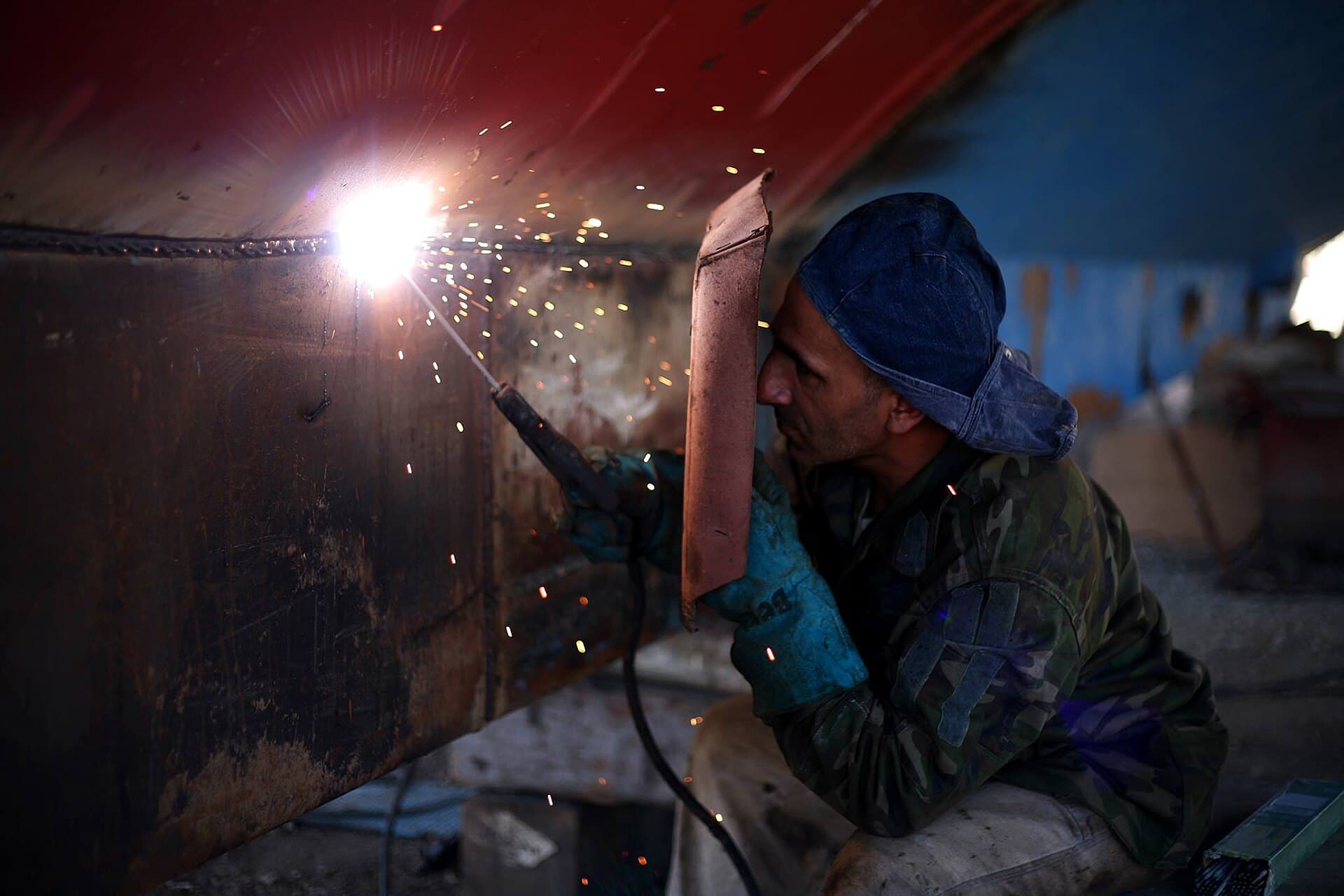
5. Finish. Hot-dip galvanising, powder, paint, or a duplex system. Include transport to the galvaniser, drain holes, chasing threads, and the days the trailer sits in a yard. Galvanising versus powder coat is a technical choice with a calendar attached.
6. Electrical. Loom, 7-pin or 12-pin, lights, earths, and any camera or fridge circuit. Outback-grade wiring is labour. Hardware-store wiring is a later invoice. Read wiring for the outback if the trailer will leave the bitumen.
7. Loose gear that is never loose. Jockey wheel, coupling, safety chains, spare wheel, toolbox, water tap, winch, fire extinguisher mounts. Each is small. Together they are a second axle.
8. Your time and a hire trailer. If the build takes twelve weeks and you still have to move a mini excavator in week three, the hire is part of the project cost. Owner-builders forget this because it does not appear on the workshop invoice.
| Layer | What a thin quote does | What you should see |
|---|---|---|
| Chassis | One lump, no steel sizes | Profile, thickness, drawbar type |
| Finish | "Painted" or nothing | Process, who dips, who repairs threads |
| Brakes | "Braked" | Type, ATM threshold, breakaway |
| Electrical | "LED lights" | Plug, loom route, earth method |
| Compliance | A smile | Plate, ratings, state path |
The costs that sting because they arrive after you have agreed
Scope creep you caused. A 300 mm longer deck, a second toolbox, a change from over-run to electric after the drawbar is built. Builders will do it. They will also reprice it. Freeze the brief, then pay for changes as changes.
Galvanising repairs. A dip finds every undrained pocket and every weld that was not cleaned. Good builders design for the bath. Average builders discover the bath. Either way, someone pays for the extra hours.
Registration and engineering surprises. A trailer that is straightforward in one state can need another conversation after a border. Confirm the path with the agency that will issue the label — transport.tas.gov.au if you are on Tasmanian plates, nt.gov.au in the Territory, and so on. Do not let a quote assume a Victorian process for a Queensland registration.
Tyres that fit the brochure. Light trailer tyres are cheap. The correct load index at the correct diameter for a plant trailer is not. If the quote says "tyres" without a size and load index, assume the cheap ones.
The tow vehicle. A new trailer can force a new towbar, a brake controller, a 12-pin socket, and in a few painful cases a different ute because GCM was already gone. That is not the builder's greed. That is ATM, GTM and the plate arriving at the bullbar.
Field note from an Adelaide Hills kitchen: the dearest quote was the only one that mentioned chasing threads after the galvaniser. The cheapest quote mentioned nothing after "dip." Guess which trailer still had zinc in the coupling nut.
How to compare quotes without being played
Send the same one-page brief to every shop. Ask them to price to that page, and to list exclusions in the same order as your stack. Then compare exclusions, not totals.
A useful question set lives in questions to ask a trailer manufacturer. For budgeting, three questions do most of the work:
- What, exactly, is not included that I will need to drive away and register?
- What happens to the price if I change from powder to hot-dip after you have started?
- Who owns the trailer if I pay a deposit and the shop takes six extra weeks?
Deposits should be enough to buy steel, not enough to finance the rest of the workshop. Stage payments against visible milestones — steel in, welded, back from the dip, wired, plated. If a builder wants it all up front, you are funding their cashflow, not your trailer.
Owner-supply of parts is a false economy unless you and the builder write the interface down. An unstamped coupling, a no-name plug, or axles with no ratings will not be anyone's warranty problem except yours.
A worked shape, not a price list
Numbers age. Shapes last. For a mid-sized tandem plant trailer in southern Australia, a realistic mental model looks like this:
- Chassis and drawbar as the largest single workshop line, but not the majority of drive-away cost once finish and running gear are honest.
- Running gear and brakes as the second pile, especially with electric brakes and a decent tyre.
- Finish as a four-figure decision, not a colour.
- Electrical, loose gear and compliance as the death of a thousand line items.
- Contingency as a real envelope, not a hope.
A single-axle 7x4 box trailer is a different shape. The chassis is a smaller share. The compliance and running-gear lines do not shrink as fast as people expect, which is why a "simple" custom 7x4 can land closer to a good used tandem than the owner wanted.
Used is a budget option when it passes the used trailer checklist. It is not a budget option when you are buying someone else's unfinished custom and calling it a saving.
Hold the number in public
Write the total you will not exceed, including the towbar, the first registration, and a hire trailer for the overlap. Put it on the brief. Tell the builder. Tell yourself at the kitchen table when the toolbox upgrade looks cheap.
If the quotes still will not sit still, the brief is moving. That is a specification problem, and it is cheaper to fix on paper. The buying hub is there for the surrounding decisions; editorial standards is a reminder that we do not publish workshop prices as if they were quotes you can spend.
Next step: take your three quotes and mark every missing layer from the stack above. Ask each builder for a revised figure against the same page. The shop that can do that without getting shirty is the shop you can budget with.
Questions readers ask
- What share of a custom trailer budget should the chassis be?
- On a straightforward open trailer, raw steel and labour for the frame often land around two-fifths to a half of the drive-away figure. Finish, axles, brakes, lights, floor, coupling, jockey, spare and compliance eat the rest. If a quote is almost all "chassis," you are not looking at a finished trailer.
- How much contingency should I keep for an Australian custom build?
- Fifteen per cent is a minimum if the brief is stable and the builder has done this shape before. Twenty-five per cent is more honest if you are still deciding on galvanising, electric brakes or a change of deck. The contingency is for your indecision as much as for their extras.
- Why do galvanised trailers cost more than the zinc looks like it should?
- You are paying for design that can be dipped, for plugging and draining, for threads that need chasing, for transport to the bath, and for the days the trailer is not in the workshop. The zinc is the visible part. The calendar is the expensive part.
- Should I buy running gear myself to save money?
- Only if the builder agrees in writing to fit what you supply, and you are buying rated axles, couplings and plugs from a proper supplier. Saving two hundred dollars on an unstamped 50 mm coupling is how you spend two thousand later. Warranty arguments start at "customer supplied."
- When is a used trailer a better budget than a custom build?
- When a used chassis already matches your ATM and duty cycle, and the reset cost still undercuts a new quote. Run the [used trailer checklist](/articles/new-vs-used-custom-trailers) before you treat custom as the default. Custom is for the brief the used market cannot meet.