Wiring a trailer that survives the outback
Outback trailer wiring fails at earths, junctions and abrasion, not at the globe. Route the loom for corrugations, specify the plug, and give yourself a field repair.
By Morgan Blake · 10 August 2026 · 7 min read · 1,527 words
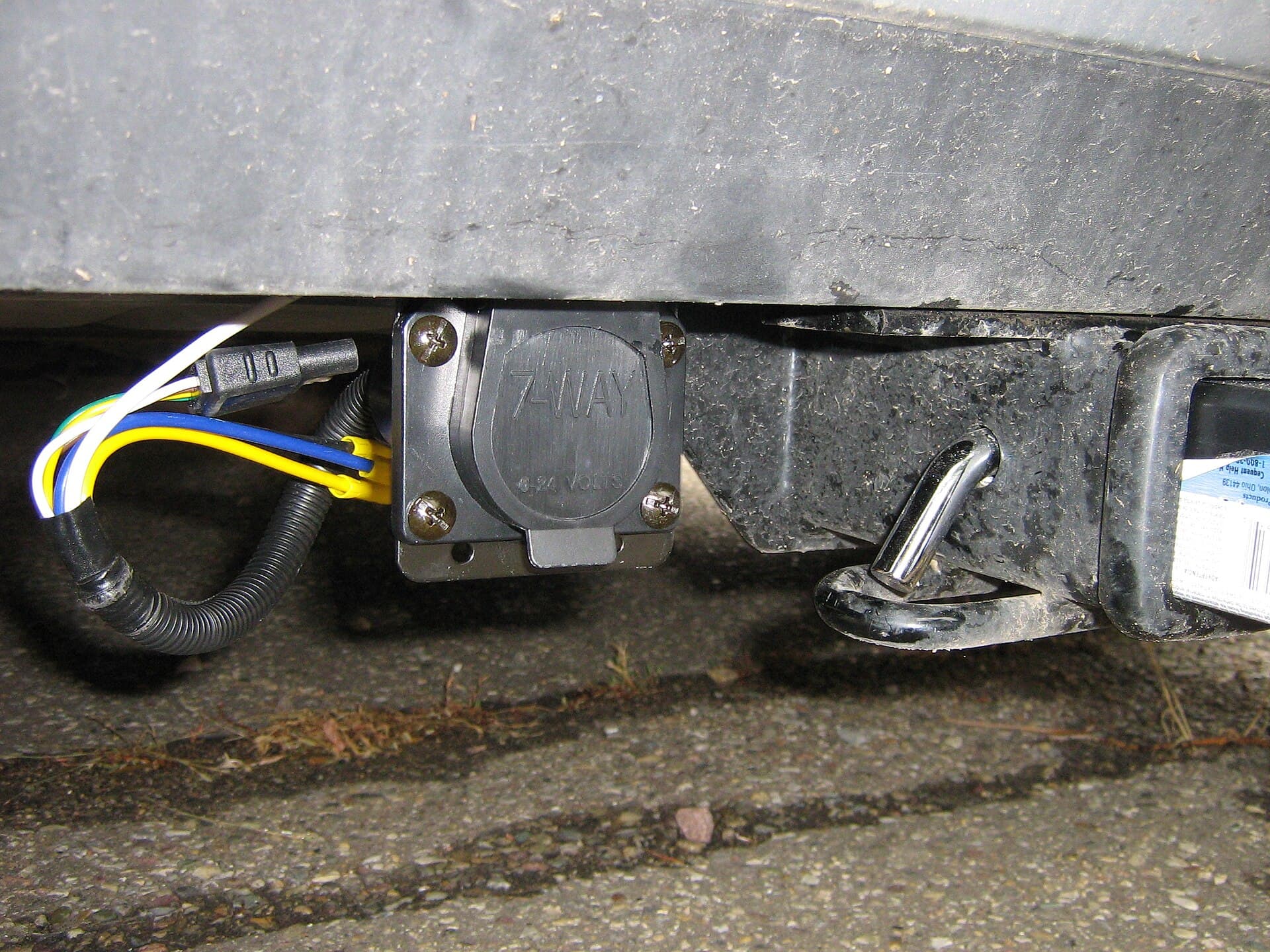
Night, a haul road south of Port Hedland, no moon, the kind of red dust that gets inside a closed toolbox. The dual-cab still has headlights. The plant trailer does not have a tail light, a number-plate lamp, or a flicker of amber. The 7-pin at the drawbar is packed with dust. The earth pin is the colour of an old penny. Somewhere back along the chassis a cable-tie has cut through a sheath on the corner of an RHS rail, and the corrugations have been working that copper like a hinge since Newman. The globe in the left lamp is fine. The circuit is not.
Outback trailer wiring does not fail in the way suburban wiring fails. In town you get a blown globe and a Saturday at Supercheap. On dirt you get abrasion, a shaken-out earth, water in a scotchlok, and a plug that has been used as a handle. The fix is not a brighter LED. The fix is a loom that was routed for a washboard, joined like it would be inspected, and earthed like someone meant it.
This is a builds piece with a towing shadow. Combination behaviour lives in the towing hub. The loom lives here.
Why corrugations kill the pretty loom
A trailer chassis on a corrugated road is a vibration table. Every clamp is a wear point. Every unsupported loop is a pendulum. Every join that was "just a scotchlok under the tape" is a hinge.
The failures cluster:
- Drawbar exit. The cable leaves the plug, hits the first clamp, and rubs on a frame edge. This is the number one cut.
- Local earths. A screw into powder coat, working loose, working green.
- Mid-rail joins. Extra lamps, a number-plate light, a licence-plate plinth added later.
- Mudguard lips. Stone rash and a cable that was tied to the guard stay.
- The plug itself. Bent pins, a broken earth, a lid that does not shut, a trailer plug used to drag the trailer around the yard.
Heat cooks sheath. Red dust is grinding paste. A creek crossing adds water to the dust and makes a grinding paste with ambition. Coastal owners get salt in the same joins; they just get it with less corrugation. The habits overlap.
Field note from a Pilbara night: I have replaced more looms because of one sharp rail and a cable-tie than because of any lamp brand. If you can catch a fingernail on the steel where the wire sits, the road will finish the job.
7-pin, 12-pin, and the circuits you actually have
The Australian 7-pin plug is the default and it is enough for lights and a single auxiliary on many farm and boat trailers. The 12-pin exists because electric brakes, reverse, camera, and extras do not fit a tidy 7-pin story once you stop using adapters as a lifestyle.
Choose the plug for the circuits, then build the loom for the road.
- Lights, tail, brake, indicators, auxiliary: 7-pin is honest.
- Electric brakes, breakaway, reverse, camera: 12-pin is the cleaner plate.
- Adapters at the drawbar: a spare in the glovebox, not the permanent plan. Adapters are how earths go missing at night.
The plug rating is not a licence to undersize the cable. Brake circuits carry current. Voltage drop on a long tandem with tired joins is how you get brakes that work in the driveway and fade at 80 km/h. Match cable size to run length and current, then protect it.
Breakaway is a safety circuit tied to ATM, not a decoration. If the plate and the ADR brake story say you need it, wire it as if you expect to use it on a shoulder south of Halls Creek. State pages such as WA transport and NT government driving will not teach you loom routing. They will still be the agency that looks at the trailer after a defect.
Earths, joins and the path along the chassis
One planned earth. Scrape to bare metal on a tab or bolt that was welded or fitted for the job. Protect it. Do not earth through the coupling hitch and a lick of paint. Do not add a new lamp by screwing into the nearest rail.
Joins you can service. Crimps done with the right tool, adhesive-lined heat shrink, junctions in a box you can find without removing the floor. Scotchloks are how looms become archaeology. If you must join in the field, make it a repair you replace at the next town.
Routing. High enough to miss the stones, low enough to miss the deck hardware, and never hard against an un-radiused edge. Grommet every hole. A hole in an RHS rail is also a chassis and drain decision — do not put a wiring gland in the highest-stress face of a drawbar throat.
Clamps. Soft, spaced, and not so tight they cut the sheath. Corrugations will move a loom that is clamped once every two metres. They will cut a loom that is clamped to a sharp lip.
The plug lead. Long enough to turn, short enough not to drag. A lead that can catch a kerb or a rut will be used as a handle. Support it. Specify a quality 7-pin or 12-pin with a lid that shuts in dust.
Finish matters here. Powder coat is an insulator until you scrape an earth. Galvanising is a better earth path and still wants a designed tab. Do not let a pretty powder job become an open circuit.
Lamps, brakes and what you carry as a spare
LED modules survive vibration and draw less. They also fail as a unit, and the one you fitted may not sit on a hook in a remote roadhouse. Carry a spare of the lamp you actually use. If the trailer is a workhorse, a wired parallel incandescent at the rear is old-fashioned and surprisingly useful when a sealed module dies at dusk.
Number-plate lamps get kicked. Side markers get stripped by saplings on a station track. Mount them where a branch is a glance, not a grab.
Electric brakes need a controller that matches the magnet load, a plug that actually carries the brake pin, and a breakaway that is tested, not assumed. If you specified ATM in the buying brief high enough to require that system, you also specified this loom. There is no "we'll wire the brakes later" that survives the first weighbridge or the first range.
Boat owners dunk the same electrical system. The outback habits — sealed joins, a plug that is disconnected and rinsed, bearings packed — are the coastal habits with more dust. Do both if you do both jobs.
A loom brief a fabricator can follow
Put wiring on the drawing, not in a wave toward the tail.
- Plug type, pin functions, and whether the tow vehicle already matches.
- Cable size for lights and for brakes, separately if needed.
- Earth tab location, front.
- Route: drawbar, inside or along the rail, guard crossings, gland points.
- Junction box location you can reach with the floor in place.
- Lamp models and a spare lamp included in the handover.
- Breakaway, battery or supply, and a test on pickup.
If the shop cannot talk about that list, they are fitting lights, not wiring a trailer. Questions for manufacturers covers the conversation. You still have to write the pins.
Used trailers deserve a loom reset more often than they get one. Price a rewire in the used checklist if the plug is green and the cable is original to a 2008 paint colour.
Field kit and the check you do in daylight
Carry, at minimum:
- A plug, a few metres of the cable you used, adhesive heat shrink, and a crimp tool that is not the $9 pair.
- Spare lamps and a pair of load-rated fuses if you fused the trailer side.
- Dielectric grease for the plug, and a brush for the pins.
- Cable-ties and a short length of split loom for a night repair you will redo later.
- A test light or a cheap tester that tells you whether the vehicle or the trailer is the dark one.
In daylight, before a dirt section: wiggle the plug, look at the first clamp, look at the earth, and look at the tail lamps with someone in the cab. At night on the haul road you have less patience and fewer spare hands.
Wash the plug. Do not store the trailer with the plug connected in the rain. Red dust plus moisture in a 7-pin is a chemical factory. That is maintenance, and the maintenance hub is where the aftercare sits. The build is what makes aftercare possible.
Next step: crawl the trailer you will take bush, photograph every join and every place the loom touches steel, and fix the fingernail-catchers before you pack the water. If you want the rest of the build to match that standard — chassis, floor, finish — start at the builds hub and treat the loom as structural, because on Australian dirt it is.
Questions readers ask
- Should I fit a 7-pin or a 12-pin plug for outback work?
- Fit 7-pin if you only need lights and a basic auxiliary. Fit 12-pin if you run electric brakes, a breakaway monitor, a reversing camera or a fridge circuit and you want those jobs on defined pins rather than a mess of adapters. The plug is not the loom. A 12-pin on scotchloks will still fail on the first corrugation.
- Why do my trailer lights die on dirt roads but work in town?
- Corrugations open tired joints and shake earths that were only touching through paint. The globe is rarely the first failure. Check the plug pins, the drawbar clamp, every scotchlok, and the earth before you buy another lamp. A clean earth tab and proper joins will survive a haul road that kills a hardware-store loom.
- Are LED lamps better for remote travel?
- LEDs take less current and handle vibration better than a tired incandescent, but a sealed module you cannot buy in a remote roadhouse is a poor spare. Carry the lamp you fitted, plus a wired-in incandescent fallback if your setup allows it. The loom quality still matters more than the marketing on the lens.
- Where should the trailer earth land?
- On a dedicated, scraped, and protected tab or bolt that was designed as an earth, not on a painted rail through a self-tapping screw. One clean earth at the front, then a planned return, beats a collection of local earths that each fail in salt or red dust. Do not earth through the coupling and hope.
- Do electric brakes change the wiring job?
- Yes. You now have current, a breakaway battery or supply, and a controller in the tow vehicle that has to agree with the plug. That is a designed circuit, not two extra wires in the same damaged sheath. If ATM requires breakaway, treat that circuit as safety gear, not as an accessory.