Chassis design: C-channel, RHS and drawbar geometry
Profile choice and drawbar geometry decide fatigue life on Australian corrugations. Heavier steel is not a design. Drain paths, joints and ball height are the job.
By Jordan Voss · 17 November 2025 · Updated 22 April 2026 · 7 min read · 1,482 words
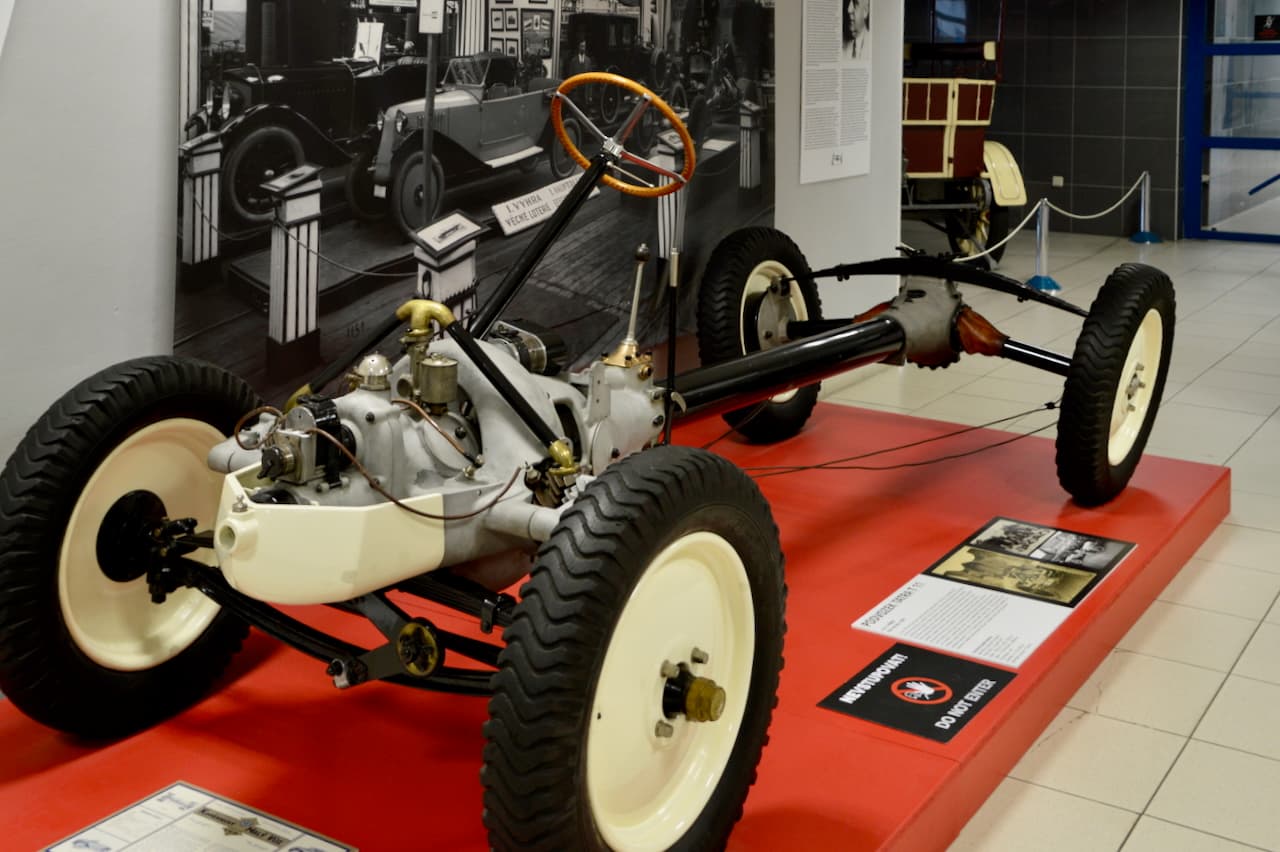
A rest area on the Plenty Highway, mid-afternoon, the kind of corrugation that makes a cup dance in the holder. The plant trailer behind a dual-cab has a crack you can see from a crouch, just behind the 50 mm coupling, in the throat where a single RHS drawbar meets a flat gusset. The weld is tidy. The geometry is not. Someone specified "75 mill square, 5 mill wall, she'll be right" and then drove three seasons of Northern Territory dirt. Heavier steel did not save it. The lever did the work it was given.
Chassis design for Australian trailers is not a catalogue of profiles. It is a set of decisions about how load gets from the deck to the tyres and from the trailer to the ball, over a road that is sometimes a road and sometimes a washboard. C-channel, RHS and I-beam are tools. Drawbar length, height and triangulation are the job.
If you are still choosing metal rather than shape, steel versus aluminium is the companion. This piece assumes steel, because that is what most Australian workshops will cut for you on a Tuesday.
C-channel, RHS and the honesty of inspection
C-channel is an open section. Water leaves it if you do not store it as a gutter. You can see the web. You can see a crack start. You can galvanise it without turning the rail into a bottle. It is less stiff than a closed section of the same mass in some directions, so fabricators add lips, gussets and sense. Old Australian farm trailers are full of channel that is still working because someone could see it.
RHS — rectangular hollow section — is neat, stiff, and a dirt trap when it is used as if it were timber. It makes a clean drawbar and a clean rail. It rusts from the inside when a weld leaves a path in and no path out. Cracks hide until they are serious. It can be a good chassis if it is vented for the galvaniser, drained for the climate, and joined without turning every weld into a stress raiser. It is a bad chassis when it is specified because it looks like a furniture frame.
I-beam and other rolled sections turn up on heavier plant. They make sense when the spans and the point loads do. They are not a personality upgrade for an 8x5 box.
The profile conversation should always include the finish. A closed section you cannot drain should not be powder-coated and forgotten. Hot-dip galvanising versus powder coat is the finish half of the same design.
| Profile | Why shops like it | What you must demand | Typical Australian failure |
|---|---|---|---|
| C-channel | Drain, inspect, repair | Decent thickness, dressed welds, spring hanger design | Thin channel used as if it were a 3.5 tonne rail |
| RHS | Stiffness, clean look | Vents, drains, inspectable joints | Inside rust, throat crack at a square gusset |
| Mixed | Channel rails, RHS drawbar | A designed junction, not a butt and a prayer | Crack at the change of section |
Field note from the Plenty: I would rather have a slightly scabby channel I can see than a silver RHS I have to trust. Corrugations write their diary in the throat. If you cannot read it, you cannot maintain it.
Drawbar geometry is the chassis
The drawbar is not a handle. It is a lever, a spring, and the thing that sets ball mass.
Length. Too short and you cannot reverse a long ute without rearranging the tailgate. Too long and every crest becomes a slap, every corrugation a bigger moment at the throat, and the trailer starts to steer the combination. Plant trailers with rear ramps want enough length to load without climbing the bullbar. Boat trailers want enough length for the outboard and the winch post, not for a photograph.
Height. Ball height is a loaded-vehicle number. A drawbar set for an empty dual-cab on 35-inch tyres will point the trailer at the moon once the ute is full of diesel and the trailer is full of excavator. The deck should sit level at the job you actually do. Level is not a lifestyle word. It is how weight stays on the axles you plated and on the ball you intended.
Triangulation. An A-frame takes coupling load into two rails and gives you places for chains, a jockey, and a spare that is not cantilevered off a single stick. A single tongue can be honest on a short, light trailer. On dirt, at ATM figures that make a car licence interesting, I want to see the load split.
The throat. This is where Australian trailers crack. Avoid a sudden fat gusset on a thin tube. Avoid a hole for a wiring gland in the highest-stress face. Avoid a weld that stops short and leaves a slit. Ask the fabricator to talk you through the joint as if they expected it to be photographed in five years.
Coupling choice sits on this geometry. A 50 mm ball is the Australian light-trailer default and must be rated for the ATM. The chain attachments should land on the drawbar structure, not on a tab that was added after someone mentioned ADR. The mechanical connection rules are not a vibe.
Crossmembers, hangers and the deck as a structure
The rails get the glory. The crossmembers do the work when you drop a pallet, a drum, or a mini excavator's track in one place.
Spacing and orientation depend on the floor. Timber wants closer supports and a chance to dry. Chequer plate can span further and then drum, and it can trap wet dirt on the rail. Flooring choices change the chassis, not only the top sheet.
Spring hangers are chassis parts. Elongated holes and torn welds at the hanger are how a "heavy" rail announces that the axle was walking. On a tandem, the load share between axles is a geometry problem. A chassis that looks straight in the shop and sits one-down after a season has a hanger or an axle issue, not a mystery.
Jacking points and tie-downs belong in the first drawing. A rail you can only lift by the mudguard is a rail someone will fold. Tie-down points that are a welded nut on a thin lip will pull out the first time a loader driver is in a hurry.
How corrugations change the brief
Outback and farm corrugations are a fatigue machine. They do not care that you overspecified wall thickness if you also specified a sharp joint. They work the loom at every clamp, which is why wiring for the outback is part of chassis design — loom path is a hole and a clamp on this structure.
Design habits that survive dirt:
- Inspectable joints at the drawbar and hangers.
- No undrained boxes in the A-frame.
- Tyres and springs that can move without beating the chassis to death — a chassis cannot make up for a rock-hard pack on a washed-out road.
- A spare and a water tap that do not cantilever off the weakest rail.
Coastal work changes the same drawing in the other direction. Every pocket is a salt bath. Open the sections. Specify the climate before you lock the profile. A pretty RHS boat trailer is a popular way to donate steel to the tidal zone.
What to put on the drawing before anyone cuts
A useful chassis drawing, even a one-pager, names:
- Rail profile and thickness, drawbar profile and thickness.
- Drawbar length from ball to axle group, and ball height at loaded ride.
- A-frame or single tongue, and how the throat is built.
- Vent and drain holes, including who is responsible before galvanising.
- Spring hanger type, axle rating, and expected GTM.
- Loom path, earth tab, and coupling rating.
If the shop does not draw, walk the last trailer they built and measure those things yourself. Questions for manufacturers will get you the conversation. Numbers on a page will get you the trailer.
State road agencies will not approve your gusset. They will weigh the result and look at the plate. Keep ATM, GTM and tare honest while you chase stiffness — reading the plate is how a heavy chassis becomes a payload problem. NSW towing guidance and NT driving and vehicles are the public-facing ends of that honesty.
Next step: crawl the trailer you already own, or the display unit at the shop, and photograph the drawbar throat and the hangers. If you cannot explain why the steel goes where it goes, you do not have a design yet. Take those photos to the builds hub reading list and to the fabricator in the same week.
Questions readers ask
- Is RHS stronger than C-channel for a trailer chassis?
- RHS is stiffer for a given amount of steel in some directions, and it looks clean, but it is not automatically stronger in the way owners mean. Closed sections rust from the inside if they are not vented, and they hide cracks, while C-channel is easier to inspect, drain and repair. Strength is the whole chassis, including the joints, not the catalogue profile.
- Why do drawbars crack behind the coupling?
- A sudden change of stiffness, a short weld, a hole in the wrong place, or a drawbar that is too high or too long for the load will concentrate corrugation cycles in one throat. More steel piled on the same bad geometry still cracks. The fix is geometry and a dressed, inspectable joint.
- How long should a drawbar be?
- Long enough for the tow vehicle to reverse without kissing the tailgate, short enough that the trailer does not become a lever that unloads the vehicle's rear axle or slaps the coupling on every crest. Plant ramps, boat motors and overhang change the answer. Measure the real vehicle and the real load, then set ball height to the loaded hitch.
- Should a heavy trailer use an A-frame or a single tongue?
- A-frames spread the load into two rails and give you chain and jacking points that make sense. A single stout tongue can work on lighter, shorter trailers if the junction into the chassis is designed. On corrugations and anything near 2,000 kg ATM, I want to see triangulation, not a broomstick welded to a rail.