Horse floats and livestock trailers in Australia
An Australian horse float is a living-animal vehicle, not a US horse trailer with a different name. Spec ramps, ventilation and ATM around the horses you actually load.
By Jordan Voss · 6 February 2025 · Updated 2 March 2026 · 7 min read · 1,439 words
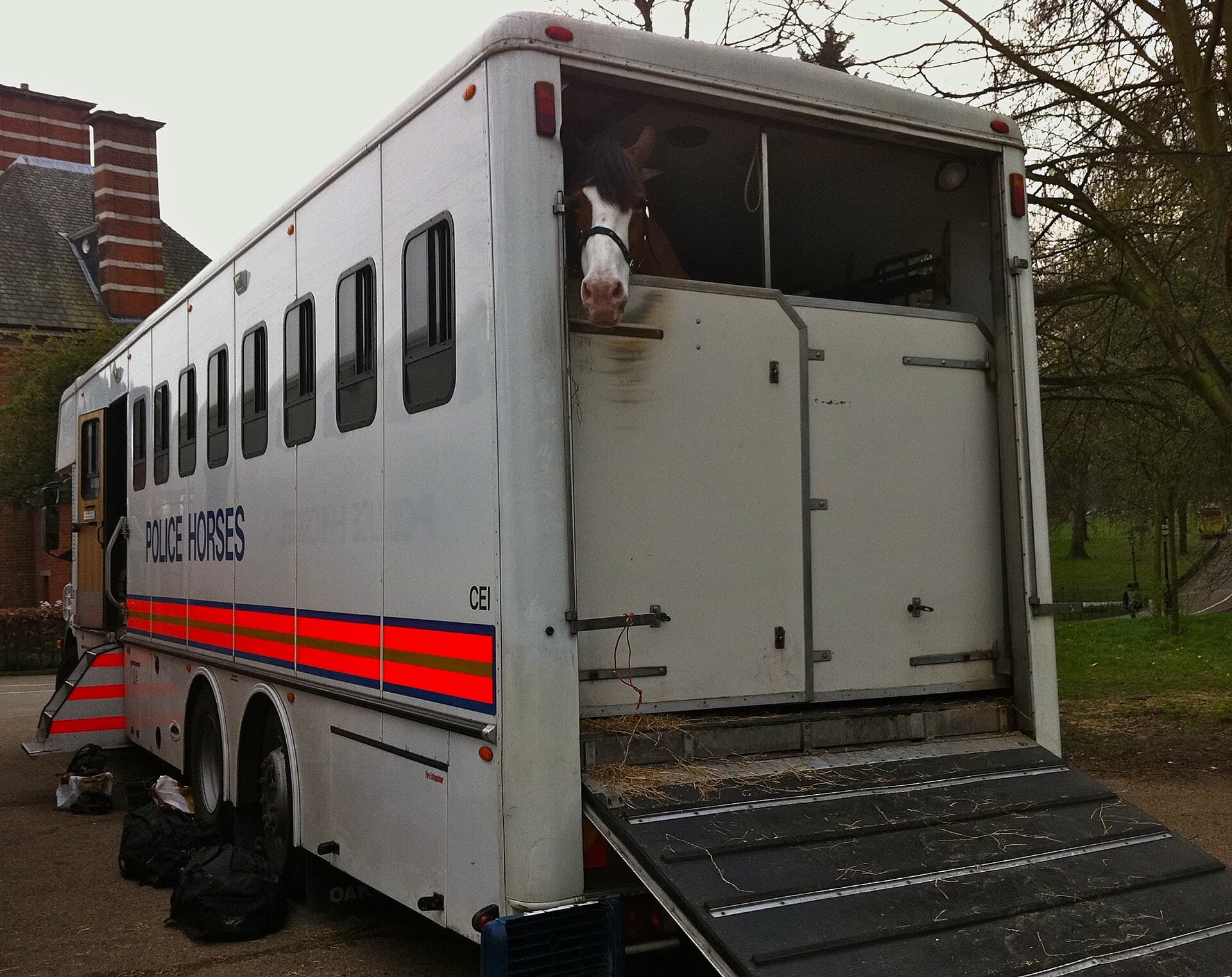
At a Pony Club gate outside Kilmore the queue is all floats, not “horse trailers”. Angle-load two-horse boxes sit behind dual-cabs. A straight-load from the 1990s has a ramp that is a fraction too steep for a green mare. Someone has borrowed a cattle crate “just this once”. The mare is unimpressed. In Australia we say float, and we mean a living-animal vehicle built around local yards, local utes and local heat — not a North American gooseneck with the word swapped.
A horse float is not a box trailer with windows. The payload breathes, slips and changes its mind halfway up the ramp. Spec the ramp, the ventilation, the partitions and the ATM around the horses you actually load, or you will own a tidy paint job that a 16-hand warmblood refuses to enter on a 38-degree afternoon.
Float, not trailer: what that changes
North American “horse trailers” are often larger, frequently gooseneck, and built around pickups. The Australian default is still a two-horse angle-load on a 50-millimetre ball, towed by a ute, used for Pony Club, campdraft and a weekend at Warwick. Three-horse and gooseneck builds exist; they change the tow vehicle immediately.
Angle-load puts horses on a diagonal so the box can be shorter and the ramp can sit at the back corner. Horses often load more willingly because they are not walking into a dark straight cave. Straight-load is simpler to partition and still common on older floats and on some racing work. Neither is morally superior. The ramp angle, the light inside the box, and the handler’s habits decide more than the brochure layout.
Coupling types on floats are almost always a 50-millimetre ball. Pintle is a plant-trailer habit. Gooseneck shows up when someone has moved to a truck or a serious three- or four-horse. Height-match the coupling so the float sits level. A tail-low float puts extra mass on the axles and a nasty ramp angle on the horse.
Livestock trailers are a different machine
Cattle crates, sheep crates and mixed livestock trailers are built for animals that load from a race, stand in groups, and are not wearing a thousand dollars of leather. Floors, vents, gates and legal duties all differ. The national animal-welfare standards and the state codes sit behind that work; the Department of Agriculture welfare pages are a public starting point, and your state department still owns the local rules.
A stock crate can move a quiet horse in an emergency if the floor is right. It is not a float. If your year is horses, buy a float. If it is cattle with a horse on the side, be honest about which animal the trailer is for.
Mass: two horses are not twice a saddle
People quote a horse at 450 to 600 kilograms as if that number is the payload. Add a second horse. Add rubber mats, a full 60-litre water drum, saddles, a hay net that was supposed to be light, and a steel float that already tares 900 to 1,400 kilograms. You are looking at 2,000 kilograms ATM as a working minimum for many two-horse combinations, not a heroic 1,600.
Read the plate the way a weighbridge will. ATM is the loaded limit. GTM is the axles. Tare is the empty float, and empty on a float still includes rubber and partitions. Payload is what is left for horses and gear. If the payload is 800 kilograms and the horses are 1,000, you do not have a packing problem.
| Setup | Typical tare | Typical ATM conversation | Tow notes |
|---|---|---|---|
| Older single-axle two-horse | 700–1,000 kg | Often tight once two adults load | Check brakes and GCM twice |
| Tandem angle-load two-horse | 1,000–1,400 kg | 2,000 kg ATM is a common honest spec | Electric brakes, breakaway |
| Three-horse | 1,400–1,900 kg | 3,000 kg+ ATM appears quickly | Dual-cab limits, sometimes a truck |
| Small stock crate | 800–1,600 kg | Payload is animals plus waste | Different welfare and loading |
Match the float to the tow vehicle with GCM, not with “the Ranger tows fine empty”. A dual-cab with a 3,500-kilogram tow rating still has a rear axle and a GCM. Two warmbloods, a loaded canopy and a 1,300-kilogram float will find that number. State licensing pages — NSW driving and towing is one public door — tell you when a heavier combination leaves a class C comfort zone.
Field note: A campdraft family out of Roma bought a tidy three-horse because “one day we’ll have three”. They had two. The third stall filled with drums, a generator and a fold-out kitchen. The first public weighbridge on the way to Warwick put them over ATM with the two horses they already owned. They sold the kitchen, kept two stalls, and the horses travelled better for the space.
Ramps, floors and the horse that will not load
Ramp angle is a welfare spec. A ramp that is too steep, too shiny, or too hollow-sounding will teach a young horse that floats are optional. Non-slip, a gentle angle, sides the horse cannot step off, and a ramp that does not bang like a drum are the basics. Lift-up rear doors without a ramp exist on some racing floats; they assume a dock or a very steady horse.
Floors fail from urine and from people who never lift the mats. Timber rot under rubber is a classic Australian float death. Alloy or composite floors with drainage you can actually hose out last longer if the builder understands horses rather than just welding. Trailer flooring is written with box trailers in mind; on a float the question is drainage and grip, not chequer plate for a drop saw.
Partitions should hold a horse without bruising it on corrugations, and every bar has to release in a genuine emergency. Ask the builder to show you how, with the door shut. Australian floats cook: cross-flow vents and a colour that is not an oven are part of the animal spec. A dark float on the Newell in January is a welfare problem with registration.
Brakes, lights and a load that moves
Over 750 kilograms ATM you need brakes. Almost every useful float is over that line. Electric brakes with a controller you know how to use are the usual tandem answer. Override couplings on a 2.2-tonne float descending into the Hunter are how fade becomes a story. Over 2,000 kilograms ATM, the breakaway is not a suggestion. When a trailer needs brakes is the threshold piece.
A horse that scrambles mid-corner changes the combination in a way a pallet of tiles does not. That is why weight distribution and sway matters, and why a level coupling and correct tyre pressures are not vanity. If the float yaws every time a horse shifts, look at loading and coupling height before you buy a hitch gadget.
Lights and reflectors still have to meet ADR rules. Floats collect smashed lamps from reversing onto a rail and from horses that kick a mudguard. Recess the lamps. Keep the plate visible with the ramp up. Carry a spare plug. The Australian Design Rules are the official lighting and brake frame if a roadside inspector wants chapter and verse.
Steel, rust and the yards that eat paint
Floats live in yards. Urine and mud will rust powder coat from the inside. Galvanising versus powder coat is a real frame choice; many builders galvanise the chassis and paint the box. Preventing rust means lifting mats and draining floors. Steel versus aluminium appears as builders chase tare — alloy needs isolated fasteners, not steel screws in a coastal yard.
Used floats hide floor rot and a plate that no longer matches a welded toolbox. Crawl under, smell the mats, and ask for the registration history. New versus used is sharp here because a failed floor is a welfare event. A custom build should start with horse heights, the worst ramp, GCM, and January travel — take questions for manufacturers that mention drainage and ramp angle. Bearings, brakes and the breakaway belong on a yearly service schedule.
Next step
Measure the horses, the worst loading yard you use, and the GCM on the dual-cab, then write those three numbers down before you look at paint. If you want the mass and legal frame around that list, start with payload, ATM and tare on the trailer plate and do not buy a float whose payload only works on a quiet pony in May.
Questions readers ask
- Why do Australians say horse float instead of horse trailer?
- Float is the local word, and the common local layout is an angle-load or straight-load box behind a ute or dual-cab, not the large gooseneck “horse trailer” familiar in North America. The difference is more than language. Ramp angles, ventilation, and typical ATM all follow Australian roads, Australian utes and Australian yards.
- How much ATM does a two-horse float need?
- Two horses plus tack, water and a steel float can surprise people who only weighed the empty trailer. A 500-kilogram horse is not a 500-kilogram payload line once you add a second horse, rubber mats, a full water drum and a saddle box. Many useful two-horse floats live at 2,000 kilograms ATM and above, which means brakes, a breakaway and a tow vehicle with a real GCM.
- Are livestock trailers the same as horse floats?
- No. A cattle or sheep crate is built for different animals, different loading, and different welfare rules. You can move a quiet horse in a well-prepared stock crate in a pinch, but a float’s partitions, floor, ramp and ventilation are specified for horses. Do not buy a crate and hope the mare agrees.
- Do I need a special licence to tow a horse float?
- Many two-horse combinations stay inside a class C licence if the tow vehicle and GCM agree. Heavier three-horse and gooseneck setups, or a truck-and-float combination, can push you into another class. Check the plates and your state licensing rules before you assume the family dual-cab covers a loaded three-horse.